







The Fulani Crossroads: A Strategy for Survival and Sovereignty in a Divided Sahel
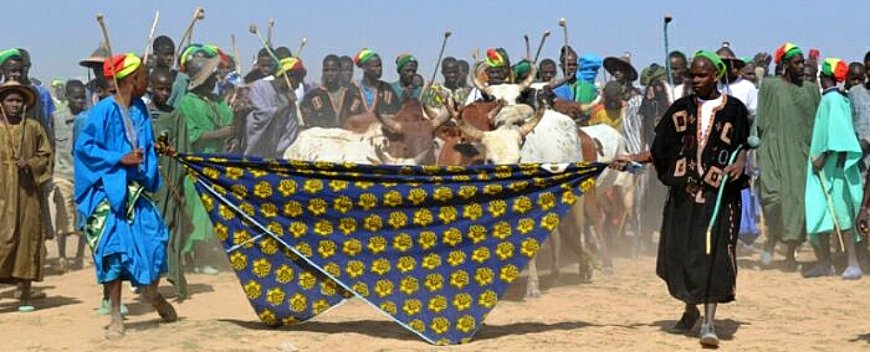
The Fulani Crossroads: A Strategy for Survival and Sovereignty in a Divided Sahel
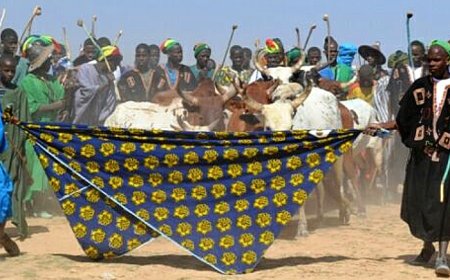
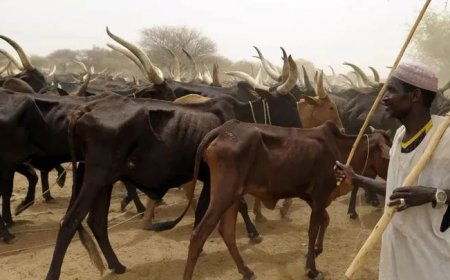
For centuries, the Fulani (or Fulbe) have been the backbone of the vast savannas stretching from Senegal to Cameroon and into the Central African Republic. Their herds have moved in ancient rhythms across the Sudanian savanna that critical transition zone between the parched Sahel to the north and the lush mangroves of the coast following the life-giving waters of rivers like the Benue, which rises from the Adamawa Mountains, and the Niger, whose source is in the Fouta-Djalon highlands of Guinea.
They have built empires, spread knowledge and faith, and adapted to the harshest climates on earth. The Fouta-Djalon in Guinea, the Fulani Empire of Macina in Mali, the Sokoto Caliphate in Nigeria these were not just political entities but civilizations that shaped the destiny of West Africa.
Yet today, the Fulbe, find themselves at a dangerous crossroads. They are no longer just navigating drought and pasture; they are navigating a sophisticated, multi-layered trap where global geopolitics, resource wars, and local grievances intersect with devastating precision.
The Political Marginalization they Face
The truth must be stated clearly. In Guinea, fulbe are politically marginalized their voices systematically excluded from decisions that affect their ancient homelands in the Fouta-Djalon. But in Nigeria, the situation has taken a far more dangerous turn. They face not mere marginalization but something approaching open persecution.
Since the return to democracy in 1999, the pattern has been consistent and alarming. Virtually every major crisis has been exploited by incompetent politicians who some of them know they can never secure power without encouraging and indeed arming tribal and religious militias. The Niger Delta militancy was eventually addressed through Yar'Adua's Amnesty Programme. Boko Haram, which exploded after the extrajudicial killing of Mohammed Yusuf, continues to fester despite Buhari's indirect Amnesty through Operation Safe Corridor.
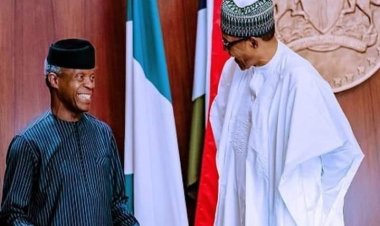
But what makes the Nigerian situation uniquely deadly for nomadic Fulani is the open, unchecked call for our destruction. It has become daily fare from radio stations to national newspapers to the relentless online castigation on platforms like TikTok. The government maintains a deafening silence. Even under Buhari, a Fulani president, there was never a clear condemnation of the hate speech directed at our people. This silence was interpreted as consent.
The situation worsened because powerful Nigerian churches and certain extreme Christian groups, armed with considerable financial resources, independently fund and support anything they perceive as protecting Christian interests without investigation, without nuance, without regard for justice. When farmers-herder conflicts turned deadly around Plateau and Benue, the narrative was shaped entirely by those with money and media influence.
The Deeper Pattern of Targeting
From the gold-rich hills of Zamfara where the historical expulsion of Sullebawa and Fulani clans by figures like Yerima Bakura ignited cycles of retaliatory violence to the scarred landscapes of Mali, where the Tuareg-led quest for Azawad resulted in the destruction and occupation of some Fulani cities in Mopti, Ségou, and Timbuktu and Macina a pattern emerges. It repeats in the conflict zones of Benue, Southern Kaduna, and across the border into Central Africa, where rebels seize power and Fulanis are blamed regardless of who actually led the rebellion.
This is displacement. This is targeted violence. This is scapegoating.
The data confirms our lived experience. The 2024 Sahel Humanitarian Needs Overview reports that nearly 21 million people require life-saving assistance across Burkina Faso, Mali, Niger, and Nigeria. Pastoralist communities predominantly Fulani are bearing the brunt. We are caught between jihadist groups exploiting genuine local grievances for recruitment, state forces conducting brutal crackdowns on our communities, and self-defense militias often backed by powerful political or Christian interests seeking to clear our ancestral grazing lands for agriculture or resource extraction.
The "sinister plot" is not a simple conspiracy but a tragic convergence: weak governance (as documented in analyses of the Mali conflict) creates a vacuum; climate change (well-documented in research on nomadic adaptation) shrinks grazing lands and intensifies farmer-herder conflicts; and global powers view the region's minerals, oil, and fertile land as spoils of war. In this chaos, the illiterate and marginalized Fulani nomad becomes the perfect pawn and the perfect scapegoat.
Some interests seek to divide the hegemony of a united Northern Nigeria. Others aim to destabilize the Sudanian savanna region that vital belt between the Sahel and the mangroves for resource control. The Fulani are simultaneously weaponized by some and targeted by others.
Our Survival Strategy: From Victims to Architects of Our Future
To survive this deadly and dangerous plot, we Fulbe must move beyond passive endurance. We require a holistic survival strategy rooted in our values but adapted to this geopolitical storm. Here are the critical steps I believe we must take.
1. Operation Save the Next Generation: Rescuing Our Displaced Minors
Across the cities of West and Central Africa from N'Djamena to Bamako, from Niamey to Abuja, from Maroua to Bangui I estimate that at least 5,000 Fulani minors (and likely far more) are displaced, orphaned, and roaming the streets. These children are the primary targets for recruitment by extremist groups and criminal gangs. They are also the easiest targets for those who would use them against us.
The Strategy: Wealthy Fulani individuals, our diaspora communities, and existing tribal associations must establish a coordinated Fulani Education and Resettlement Fund. This is not charity; this is survival insurance.
The Action: We must identify these children, provide them shelter, and most critically, education. A literate, skilled Fulani youth cannot be easily radicalized or manipulated. By investing in these 5,000, we save ourselves from 5,000 future recruits for our enemies and gain 5,000 future advocates for our people. This aligns with humanitarian calls to provide education which reached 2 million children in the Sahel in 2023 but it must be community-led, by us, for us.
2. Knowledge is Power: Bridging the Literacy Gap
We must honestly acknowledge that many nomadic pastoralists remain illiterate and uneducated. This is our primary vulnerability, the opening that allows outsiders to recruit our youth into sinister plots. Ignorance makes us dependent on external interpreters whether imams with radical agendas, politicians with hidden motives, or journalists who have never spent a day living our lives.
The Strategy: We must adapt education to the nomadic lifestyle. Mobile schools that move with the herds. Radio learning programs broadcast in Fulfulde. Simple technologies that teach reading, basic mathematics, and critical thinking.
The Action: We must partner with humanitarian NGOs like those mentioned in the OCHA report while ensuring education programs are linguistically and culturally accessible. The goal is to create a generation that can read grazing reserve laws, understand national constitutions, discern propaganda from truth, and represent themselves in the corridors of power.
3. Strategic Unity and Collaboration
Our history is one of migration and adaptation, but also of division. The current crisis demands unity. The conflicts in Mali and Burkina Faso are fueled by ethnic tensions between herders (us) and farmers (Dogon, Mossi, and others). But these tensions are exploited by those who benefit from our division.
The Strategy: We must formalize alliances. We cannot survive in isolation. We must build bridges with other marginalized groups who share our interest in justice and peace. Crucially, we need neutral third-party mediators who can see beyond the ethnic framing.
The Action: We must engage with human rights organizations, academic institutions studying climate adaptation, and respected religious leaders from other faiths who believe in justice. Our goal is to reframe the narrative: this is not a "Fulani problem" but a crisis of climate change, bad governance, land appropriation, and resource inequality. As academic research suggests, combining our traditional ecological knowledge with modern science is key to adaptation.
4. Legal and International Advocacy
We Fulani are often silent because we lack representation and documentation. International law including the UN Declaration on the Rights of Indigenous Peoples (UNDRIP) protects the rights of pastoralists to our traditional lands and livelihoods. But these protections mean nothing if we do not claim them.
The Strategy: We must document everything. Every village burned in Mali. Every cow rustled in Benue. Every extrajudicial killing in Southern Kaduna. Every child orphaned in Central Africa. These must be recorded and sent to international bodies: the United Nations humanitarian agencies (OCHA), the African Commission on Human and Peoples' Rights, international human rights organizations.
The Action: We must fund and support Fulani-led NGOs and advocacy groups to have a presence at international forums. When the world hears testimony directly from Fulani victims not filtered through governments or armed groups the narrative of "Fulani as terrorists" can be countered with the truth of "Fulani as victims of terrorism, state violence, and ethnic persecution."
5. Economic Diversification and Resilience
Research on nomadic adaptation consistently highlights livelihood diversification as a key survival strategy. Reliance solely on cattle in an era of shrinking grazing zones, blocked migration routes, and climate change is a death sentence. Furthermore, the billions of dollars lost in crises like Zamfara and others represent a drain on our entire community's wealth.
The Strategy: We must leverage our inherent knowledge of trade and livestock skills honed over centuries to move into other sectors. Cattle are our heritage, but they cannot be our only future.
The Action: We must create cooperatives that allow settled Fulani to engage in agriculture (securely, on land we actually own), commerce, and skilled trades. We must use our diaspora's wealth to invest in businesses that employ Fulani youth, giving them an economic alternative to the gun or the extremist camp.
6. Professional Engagement and Institutional Support
This is perhaps the most immediately actionable step. We Fulani professionals teachers, civil servants, doctors, lawyers, retired officials must stop watching from a distance. We have the knowledge, the connections, and the understanding of how systems work.
The Strategy: Every Fulani professional should join Fulbe organizations and contribute actively. Not just as members, but as mentors, advisors, and advocates. Our organizations must elect competent people to run their affairs people with integrity, vision, and the skills to navigate both traditional structures and modern bureaucracy.
The Action: We must share our knowledge and experience to assist Fulani nomads through the entire cycle: from emergency rehabilitation to long-term training and support. We must work proactively with traditional rulers who still command respect, with government agencies like the Ministries of Livestock, with the National Commission for Nomadic Education, and with bodies like the Almajiri Commission. Our women and children the most vulnerable and the most essential to our future must be the primary focus of these efforts.
The Path Forward
The plot against us Fulbe is real, but it is not invincible. It thrives on our fragmentation, our ignorance, our silence. By rescuing our displaced children, educating our youth, documenting every atrocity, building strategic alliances across ethnic and religious lines, and engaging our professionals in the work of upliftment, we can disrupt the plan to use us as cannon fodder in a war for resources.
The truth, as I have witnessed across our lands, is that these crises are stage-managed. The counter-strategy must be to un-manage them to present a united, educated, and legally empowered Fulani identity that refuses to be a pawn for jihadists, a target for militias, or a scapegoat for politicians who have never cared about our welfare.
Our survival depends on our ability to adapt once more not just to the changing climate, but to the geopolitical storm. We have done this before. We built empires when others said we were just herdsmen. We spread knowledge when others said we were just nomads. We can and will navigate this crossroads.
The question is not whether we will survive. The question is whether we will survive with our dignity, our culture, and our future intact. That answer lies in our hands alone.